Contract Review Workflow Automation That Scales
By Formiti Global DPO Team, Formiti Data International
Contract review workflow automation that scales: intake, routing, clause playbooks, approvals and evidence tied into privacy, vendor and AI governance.
Topics: Contract Review, DPA, Privacy Operations, Vendor Risk, AI Governance
Putting this into practice? See how Privacy360's AI contract review for DPAs and SCCs handles it. Review DPAs, SCCs and AI vendor terms against your playbooks and export tracked changes.
A supplier sends over a new agreement on Friday afternoon. Legal needs to review the commercial terms, privacy needs to check the DPA, security needs to confirm technical controls, and procurement wants the deal signed before month end. In many organisations, that still means email chains, version confusion, and no reliable record of who approved what. Contract review workflow automation fixes that operational gap.
For privacy, legal, and compliance teams, the issue is not simply speed. It is control. When contract review sits across inboxes, shared drives, and ad hoc trackers, key obligations are easy to miss. Data transfer terms, sub-processor clauses, retention wording, and liability positions can all end up reviewed inconsistently. As vendor volumes increase and AI-related terms appear more often in supplier contracts, that inconsistency becomes a governance risk.
Why contract review workflow automation matters now
Contract review used to be treated as a legal bottleneck. That is too narrow. In regulated environments, contract review is a repeatable governance process that affects privacy compliance, third-party risk, AI oversight, and audit readiness.
A DPA review is rarely just a document exercise. It connects to vendor onboarding, Records of Processing Activities, transfer assessments, security due diligence, and accountability evidence. If a team cannot show how a contract was reviewed, what clauses were accepted, and which stakeholders signed off, it becomes difficult to prove disciplined governance later.
This is where automation helps, but only if it is applied with the right scope. The goal is not to remove judgement from legal or privacy review. The goal is to systemise the repeatable parts so specialist teams spend time on decisions rather than administration.
What good contract review workflow automation looks like
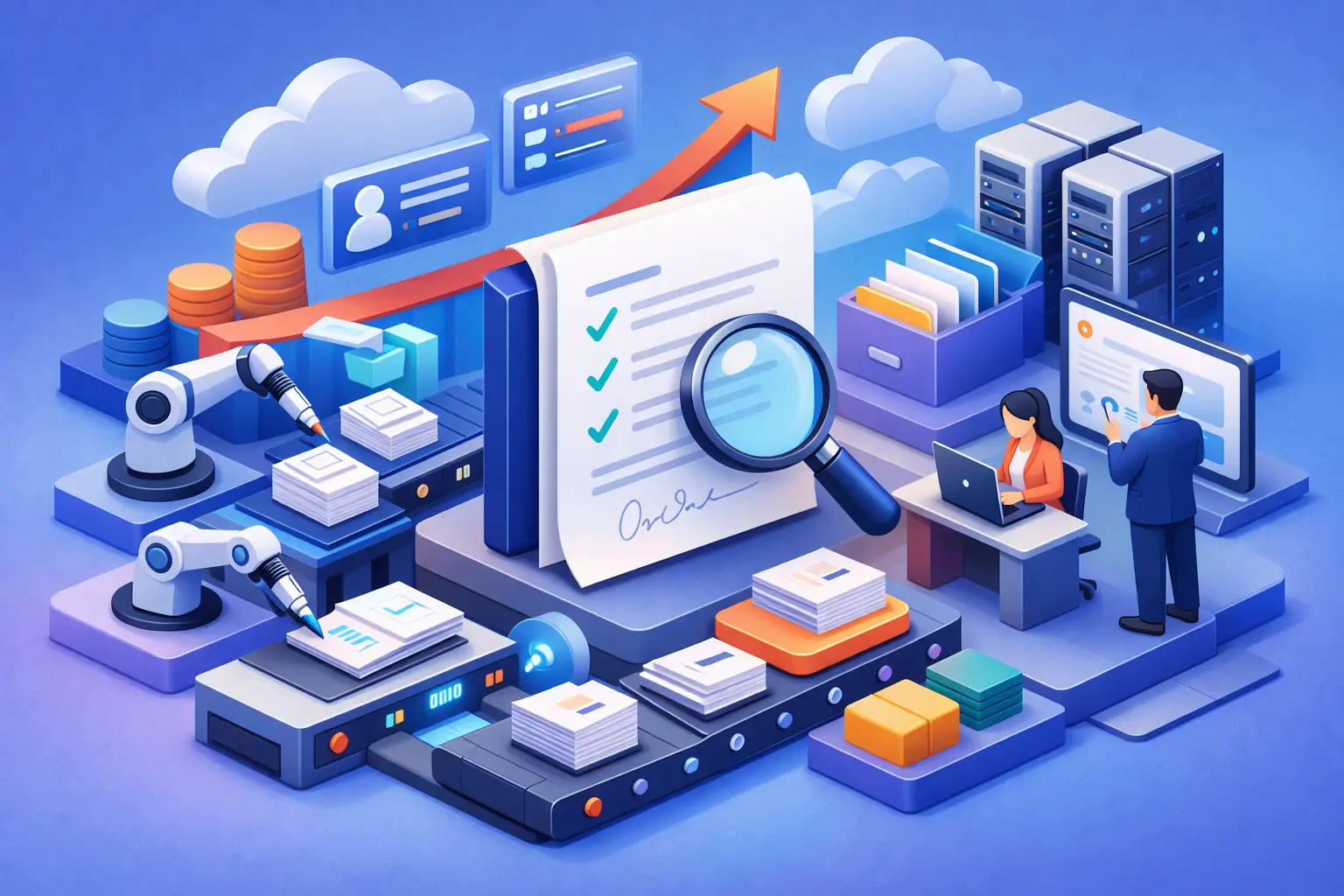
Effective contract review workflow automation is structured, role-based, and auditable. It routes the right contract to the right reviewers, applies standard review logic, captures decisions, and stores the output in a consistent record.
In practice, that usually starts with intake. A business owner submits a contract or supplier request using a standard form. The workflow identifies whether the agreement includes personal data processing, cross-border transfers, AI-related services, or material security dependencies. Based on those factors, it triggers the right review path.
Some contracts need only a basic legal check. Others need legal, privacy, security, and procurement input, with escalations if clauses fall outside approved positions. A good workflow does not treat every contract the same. It applies proportional review based on risk and context.
That distinction matters. Over-automate and teams end up forcing complex agreements through simplistic templates. Under-automate and they stay stuck in manual triage. The most effective model sits in the middle — standardise the predictable, surface the exceptions, and maintain clear ownership at every step.
Where manual review breaks down
Most teams do not struggle because they lack capable reviewers. They struggle because the process around those reviewers is fragmented.
Requests arrive through different channels. Supporting documents are incomplete. Standard clauses are stored in separate files. Review comments sit in email threads. Approvals happen verbally or in chat. By the time a contract is signed, there may be no single record showing the review path, the identified risks, or the rationale for accepting deviations.
That creates several problems at once. Turnaround times become hard to predict. Business stakeholders chase updates because status is unclear. Privacy teams repeat the same clause checks manually. Legal teams spend time on routing rather than analysis. When regulators, auditors, or internal stakeholders ask for evidence, the documentation is partial.
These issues become more pronounced in organisations managing multiple jurisdictions. A review standard that works for a low-risk domestic supplier may not be enough for an offshore processor handling special category data. If the workflow does not reflect those distinctions, either risk increases or unnecessary review effort slows the business.
The core stages to automate
The strongest approach is to automate the operational flow around contract review, not just the document itself.
Intake and classification
Every contract should begin with structured intake. That means capturing supplier details, contract type, data categories, processing purpose, jurisdictions, transfer implications, and whether AI capabilities are involved. This intake stage determines the review path and avoids the common problem of teams starting a review without the context they need.
Routing and task assignment
Once classified, the contract should move automatically to the relevant stakeholders. Privacy reviews should not depend on someone remembering to forward a document. Legal, security, and procurement tasks should be assigned by rule, with deadlines and escalation logic built in.
Clause review and redlining
Automation can support review by presenting approved clause positions, fallback wording, and playbooks for common negotiation points. For DPAs and privacy terms, that may include instructions on international transfers, subprocessors, breach notification timing, audit rights, and deletion obligations. Reviewers still apply judgement, but they do so within a controlled framework.
Approval and exception handling
Not every deviation needs senior approval, and not every contract should be auto-approved. A mature workflow distinguishes between standard, acceptable, and non-standard positions. If a supplier rejects mandatory terms or introduces a material risk, the workflow should route that issue for decision with visible accountability.
Recordkeeping and evidence
After approval, the final position should not disappear into a folder structure that only one team understands. The contract, review notes, approval trail, and related risk decisions should be retained as part of the organisation's governance record. That matters for audit readiness and for downstream processes such as vendor reassessment or incident response.
Contract review workflow automation in privacy operations
For privacy teams, the value of automation goes beyond document turnaround. It creates links across the wider compliance estate.
A reviewed DPA should connect to the relevant vendor record. A high-risk processing arrangement may trigger a DPIA. Specific transfer terms may inform international transfer assessments. A supplier using AI in a way that affects personal data may need to be reflected in an AI system registry or broader risk classification process.
Without those connections, each governance activity operates in isolation. Teams then duplicate data entry, miss dependencies, and lose visibility across the supplier lifecycle. With automation inside a unified operational system, contract review becomes part of a broader control framework rather than a standalone legal task.
This is where a platform-led approach has practical value. Privacy360, developed by Formiti Data International, is designed around connected governance workflows, including contract review and DPA redlining, vendor risk assessment, DPIAs, ROPA, incident management, DSAR operations, and AI governance. That kind of operating model reduces handoffs and gives teams a single source of record across privacy and AI oversight. Where organisations need external DPO capacity, negotiation playbooks or programme uplift alongside the platform, Formiti Data International offers specialist privacy and AI governance consulting services to accelerate contract review maturity across jurisdictions.
What to watch before you automate
Not every automation effort delivers the same result. Some fail because teams digitise a poor process without fixing decision logic first. Others create rigid routing rules that do not reflect actual risk.
Before implementing contract review workflow automation, it is worth clarifying a few things. First, which contract types need structured review and which can follow a lighter path? Second, which clauses are non-negotiable, and which have approved fallback positions? Third, who owns final risk acceptance when legal, privacy, and commercial priorities differ?
The quality of those rules determines whether automation improves control or just moves confusion into a system.
There is also a trade-off around flexibility. Large enterprises often need more complex routing, regional review variations, and stronger evidence capture. Lean teams may prioritise speed and standardisation over detailed configuration. Neither model is wrong, but the workflow should match the organisation's operating reality.
How to judge success
Success should be measured by operational outcomes, not by how many steps are automated. The better indicators are reduced review cycle time, fewer missed clauses, clearer approval accountability, and stronger audit evidence.
It is also worth looking at consistency. If similar vendor contracts produce wildly different review outcomes depending on who handled them, the process is still too dependent on individual memory. Automation should narrow that variation while preserving room for expert judgement on exceptions.
The strongest sign that the model is working is cross-functional trust. Legal knows what privacy reviewed. Privacy can see what security flagged. Procurement can track status without chasing updates. Governance leaders can report on review volumes, bottlenecks, and risk themes with evidence rather than approximation.
Contract review workflow automation is not about replacing legal or privacy expertise. It is about giving that expertise a controlled operating structure. When contract review becomes systematic, organisations gain more than efficiency. They gain a clearer approval trail, stronger accountability, and a process that can scale as vendor estates grow, regulatory obligations expand, and AI-related contracting becomes part of ordinary governance work.
The practical question is not whether contract review should be automated at all. It is which parts of the workflow still rely on memory, inboxes, and manual follow-up — and how long that remains acceptable in a governance environment that increasingly expects proof, not assumptions.