DPIA Software Review for Enterprise Teams
By Formiti Global DPO Team, Formiti Data International
A practical DPIA software review for enterprise teams: what to assess, where tools fail in live governance, and how to evaluate fit beyond a feature checklist.
Topics: DPIA, Privacy Operations, GDPR, Privacy Software, AI Governance
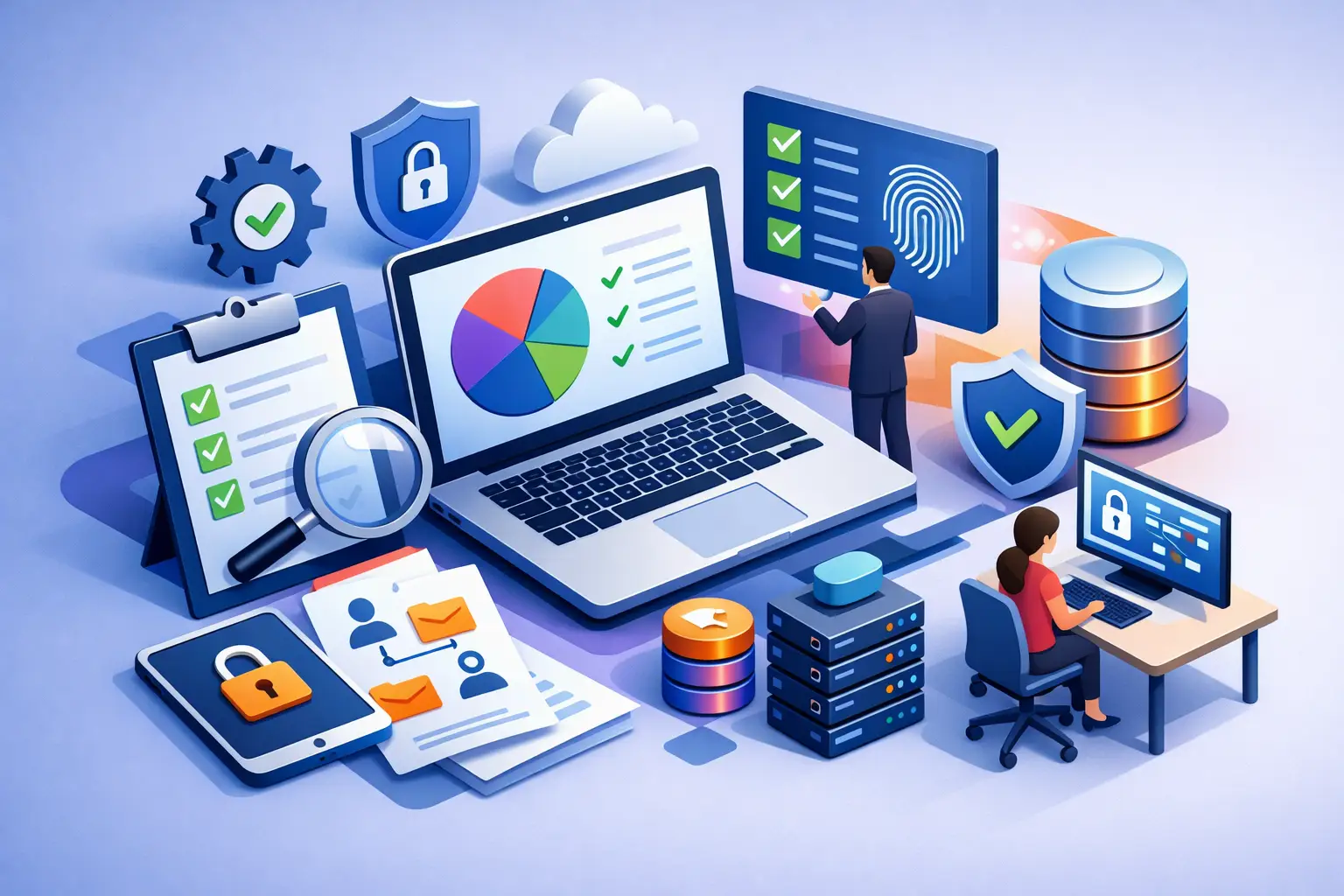
When a DPIA process still lives in email threads, shared drives and half-finished spreadsheets, the problem is rarely the template. It is the operating model behind it. That is why a useful dpia software review should focus less on surface features and more on whether the platform can support accountable, repeatable decision-making across legal, privacy, security and business teams.
For most mid-market and enterprise organisations, DPIAs are no longer isolated GDPR exercises. They sit inside a broader governance environment that includes vendor risk, breach handling, records of processing, legitimate interest assessments and, increasingly, AI oversight. Reviewing DPIA software properly means asking whether the tool helps your team control risk at scale or simply digitises the same fragmented process.
What a DPIA software review should actually assess
A basic checklist will tell you whether a product has questionnaires, approvals and reporting. That is not enough. In practice, the quality of a DPIA tool is defined by how well it handles operational pressure - changing regulations, multiple stakeholders, incomplete inputs, recurring assessments and the need to evidence decisions months later.
The first test is structure. A strong DPIA tool should guide users through a consistent assessment path without forcing every scenario into the same rigid form. Teams need standardisation, but they also need room for context. A marketing use case, a HR monitoring project and a high-risk AI deployment will not require identical treatment. Good software creates control without flattening nuance.
The second test is accountability. A DPIA is not just a document. It is a governed process with named owners, review stages, deadlines, mitigation actions and decision records. If the platform cannot assign responsibilities clearly, track status and retain an audit trail, the process remains vulnerable to delay and inconsistency.
The third test is connected governance. DPIAs should not sit in isolation from your ROPA, supplier assessments, contract review activity or AI system inventory. If assessors have to re-enter the same details across separate tools, quality drops and oversight weakens. The more your governance workflows share data and logic, the easier it becomes to maintain defensible records.
DPIA software review: the features that matter most
Workflow discipline over form builders
Many tools can generate an assessment form. Fewer can manage a full review lifecycle. For enterprise teams, workflow discipline matters more than visual questionnaire design. You need intake, triage, drafting, review, challenge, remediation and approval to happen in a controlled sequence, with clear ownership at each point.
This is especially important where privacy teams are lean and depend on business stakeholders to provide accurate inputs. Good workflow design reduces chasing, clarifies who is blocking progress and gives compliance leaders visibility across active assessments.
Risk scoring that supports judgement
Risk scoring should help teams prioritise and explain decisions, not replace professional judgement. If a platform produces risk ratings with no transparency, it creates false confidence. If it offers no scoring framework at all, teams revert to subjective calls that are hard to defend.
The better approach is configurable scoring tied to your internal methodology, with enough structure to support consistency and enough flexibility to handle different processing contexts. This matters even more when AI-related use cases are being assessed, because data protection risk and broader governance concerns may overlap without being identical.
Auditability and evidence retention
A credible DPIA process must show who said what, when a decision changed, what mitigations were proposed and whether those actions were completed. That level of auditability is essential for internal assurance, external review and regulatory response.
Software that stores only the final assessment outcome is not enough for mature programmes. You need version history, approval records, timestamps and linked evidence. Without that, the organisation may be compliant in intent but weak in proof.
Reuse without duplication
Not every DPIA starts from zero. Mature programmes often assess recurring technologies, repeat vendor arrangements or standard processing patterns across business units. Software should allow controlled reuse of prior information without copying outdated assumptions forward unnoticed.
This is where template logic, linked records and modular assessment design become valuable. The goal is efficiency with control. Reuse should shorten effort while still forcing review of key risk changes, not encourage a tick-box habit.
The operational gaps many DPIA tools still leave open
A common issue in any dpia software review is that products look capable during a demo but fail in live governance conditions. The assessment form works well enough, yet the surrounding operational problems remain.
One gap is poor cross-functional usability. Legal teams, privacy specialists, security colleagues and operational owners do not all work the same way. If a platform is too technical, stakeholders avoid it. If it is too simplistic, governance quality suffers. The balance is difficult, but essential.
Another gap is weak action management. Identifying mitigation steps is only half the job. Teams need to assign actions, monitor deadlines and confirm completion. Otherwise, residual risk decisions are made on assumptions rather than delivered controls.
A third gap is limited programme-level visibility. Senior governance leaders rarely need only one DPIA. They need to know how many assessments are open, where delays sit, which business units generate the most risk, and whether recurring issues point to a control weakness elsewhere. If reporting is shallow, the software supports administration rather than management.
Why standalone DPIA tools can become a constraint
A standalone DPIA application may solve an immediate process issue, particularly if the current state is heavily manual. But over time, point solutions often create another layer of fragmentation.
Privacy operations do not stop at impact assessments. A project that triggers a DPIA may also require a legitimate interest assessment, vendor review, contract scrutiny, updates to processing records and, depending on the use case, AI system classification. If those steps sit across disconnected systems, your team spends more time reconciling records than managing risk.
That is the practical case for reviewing DPIA software in the context of wider governance architecture. The real question is not whether the tool can complete a DPIA. It is whether it can support a joined-up operating model for privacy and AI governance.
What a stronger platform approach looks like
For organisations building repeatable control, the best DPIA capability usually sits within a broader operational system. That means assessment workflows connect to records of processing, incident management, supplier due diligence, DSAR operations and AI governance records rather than functioning as isolated tasks.
This model improves consistency in obvious ways. Core data about systems, vendors, purposes, jurisdictions and control measures can be referenced across workflows rather than recreated each time. It also improves oversight because governance teams can see related activity in one place.
Privacy360 reflects that platform approach. Its DPIA capability sits alongside LIA workflows, ROPA management, breach and incident handling, contract review, vendor assessment and AI system registry functions, which is more aligned with how enterprise governance work actually happens. Where internal teams need additional methodology, DPO support or programme uplift alongside the platform, Formiti Data International provides specialist privacy and AI governance consulting services that complement the software with hands-on expertise across GDPR, the EU AI Act and global regimes.
How to evaluate fit for your organisation
The right answer depends on programme maturity. If your organisation handles a low volume of assessments with minimal stakeholder complexity, almost any structured tool will appear to work. But once you have multiple jurisdictions, internal review layers, third-party risk dependencies and expanding AI use cases, the bar rises quickly.
Start by mapping your current DPIA lifecycle from intake to approval and post-assessment actions. Then identify where delays, inconsistencies or blind spots occur. Some teams discover the main problem is not form completion but triage. Others find the real issue is lack of visibility after actions are assigned.
It is also worth testing whether the software supports your governance language and review model. A product may look polished but still impose a workflow that does not fit your operating reality. The closer the platform is to real compliance practice, the less configuration effort you will spend correcting basic process design. Where in-house capacity is stretched, Formiti's consulting services can help privacy and legal teams shape an operating model that the software then enforces consistently.
Finally, assess reporting with executive use in mind. Boards and senior leaders do not need every DPIA detail, but they do need evidence that the process is active, controlled and tied to broader risk management. Software should make that visible without forcing the privacy team into manual reporting work every month.
The best dpia software review is not the one that asks which platform has the longest feature list. It is the one that asks which system will still hold up when assessments increase, AI oversight expands and audit scrutiny gets sharper. If your current process cannot support that future state, the right software decision is less about digitising paperwork and more about putting governance on operational footing.