LIA Workflow Software for Defensible Decisions
By Formiti Global DPO Team, Formiti Data International
What LIA workflow software should control: intake, necessity and balancing tests, approvals, evidence retention and triggered reviews you can defend.
Topics: Legitimate Interests, LIA, GDPR, Privacy Operations, Assessments
Putting this into practice? See how Privacy360's DPIA and privacy assessment software handles it. Run DPIAs, TIAs, LIAs and gap analyses across 150+ controls with tracked remediation.
A legitimate interest assessment can look straightforward until the organisation has to explain who approved it, what evidence informed the decision, and whether the conclusion still reflects the processing in practice. LIA workflow software turns that exposure into a managed process: one with defined owners, consistent review points, supporting evidence and a clear audit trail.
For privacy teams operating across jurisdictions, business units and supplier networks, this is not simply a better way to complete a form. It is a control mechanism for deciding when legitimate interests can support processing, documenting the balancing exercise, and keeping the decision current as operations change.
Why legitimate interest assessments break down
The legitimate interests basis is often used for processing that does not fit cleanly within consent, contract, legal obligation or another lawful basis. That flexibility is useful, but it creates a higher operational burden. The organisation must be able to show a legitimate purpose, establish necessity, and balance its interests against the rights and freedoms of affected individuals.
In many programmes, that work begins in a spreadsheet, a shared document or an email chain. The assessment may be completed diligently by a privacy professional, but the process around it remains weak. There may be no standard intake, no record of the business owner, no way to verify whether a supplier changed, and no trigger for reassessment when the purpose, data set or audience expands.
These gaps become more visible when privacy, legal, security, procurement and product teams each hold part of the evidence. A marketing team may understand the purpose. Security may know the safeguards. Procurement may hold the vendor terms. The privacy team must bring those inputs together while maintaining accountability for the final decision.
A structured workflow addresses that operating reality. It does not decide that a proposed use of data is lawful. It ensures that the organisation can make, approve, evidence and revisit that decision in a disciplined way.
What LIA workflow software should control
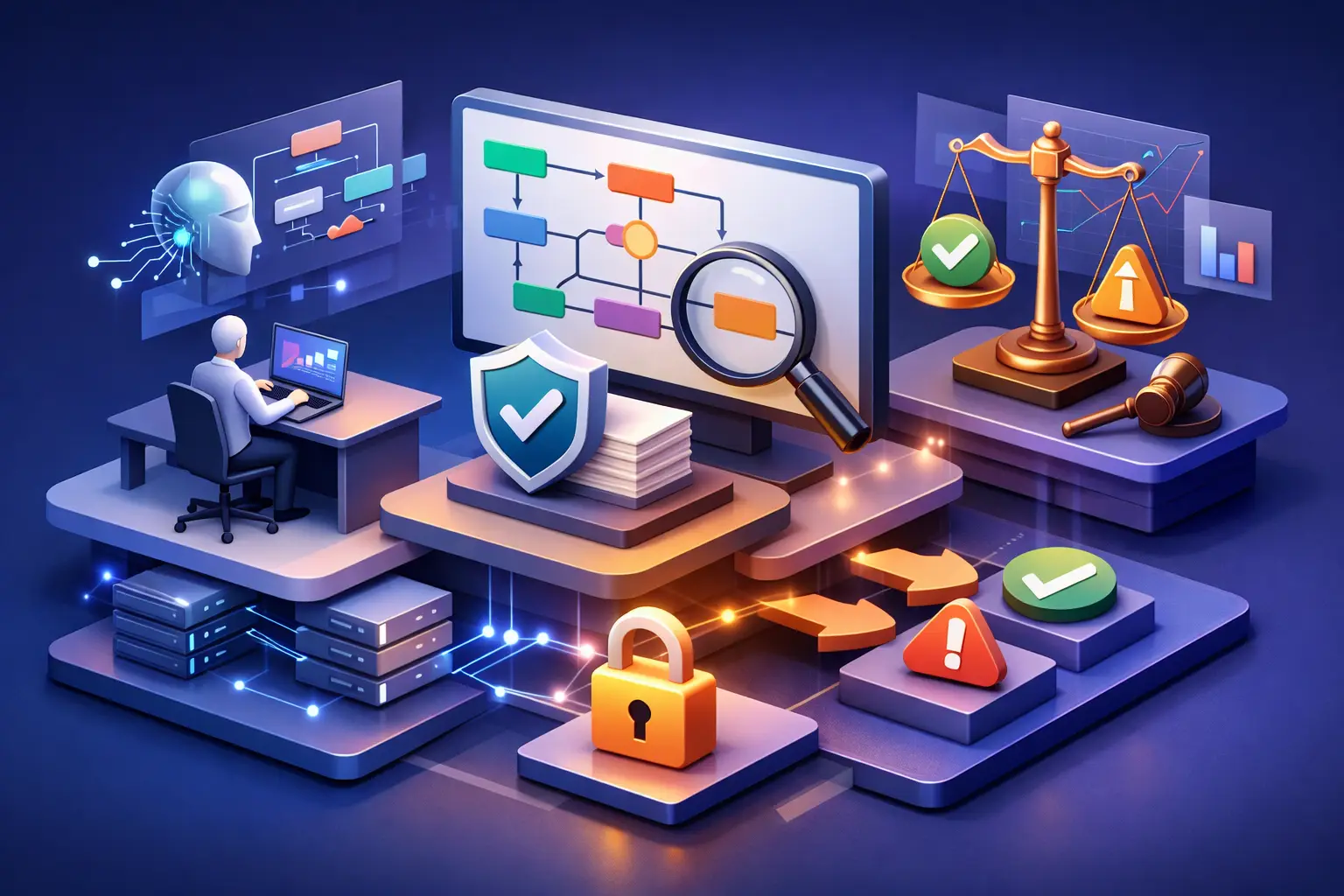
Effective LIA workflow software should manage more than a digital questionnaire. It should establish an end-to-end process from intake through approval, evidence retention and ongoing review.
At the intake stage, the system should capture the proposed processing activity in sufficient detail: the purpose, categories of individuals and personal data, recipients, data sources, retention period, geographic scope and relevant systems or suppliers. Reusing information from a record of processing activities can reduce duplicate data entry and make it easier to identify when the underlying processing record has changed.
The assessment itself should guide teams through the recognised questions without reducing them to a box-ticking exercise. What is the specific legitimate interest? Why is the processing necessary for that interest? Could a less intrusive approach achieve the same outcome? What reasonable expectations may individuals have? What safeguards reduce the impact?
The software should also assign clear responsibilities. The business owner supplies the operational rationale. Privacy or legal reviews the assessment. Security, procurement or other stakeholders contribute where safeguards, vendor arrangements or technical controls are relevant. Approval should not rest on an ambiguous email response that disappears from view six months later.
A controlled workflow generally needs four connected capabilities:
- Configurable assessment templates that reflect the organisation's policy, jurisdictional requirements and risk appetite.
- Role-based tasks, approvals and escalation paths that show who provided information, reviewed the analysis and accepted residual risk.
- Centralised evidence, including policies, data flow information, contracts, security controls and mitigation records.
- Review triggers and reporting that identify assessments due for renewal or affected by changes to processing.
The right level of configuration depends on programme maturity. A lean privacy team may need a standard path for lower-risk activity and escalation for exceptions. A multinational organisation may require different review routes by region, business function or processing sensitivity. The objective is consistent control, not unnecessary bureaucracy.
Connecting the LIA to the wider governance system
An LIA rarely stands alone. It is one decision within a broader chain of privacy accountability. If it is held separately from processing records, vendor reviews and incident information, teams are forced to manually reconstruct the context whenever a question arises.
A connected system makes the assessment more reliable. The LIA can reference the relevant ROPA entry, the application or data asset involved, associated vendors, applicable contracts and data protection impact assessment where one is required. If a new third party is introduced, a supplier risk assessment may reveal changes to international transfers, security measures or processing purposes that affect the original balancing test.
This relationship matters particularly where organisations are introducing AI-enabled tools. An AI system registry and EU AI Act risk classification process may identify a new use of personal data, automated decision support or a broader affected population. That information should not sit in a separate governance register with no route back to the lawful basis assessment. Privacy and AI governance require connected records because the operational changes are connected.
The same principle applies after an incident. Breach and incident management may expose an unexpected data flow, weak access control or processing practice that should prompt a review of associated assessments. A defensible programme treats those events as inputs to governance, rather than isolated compliance tasks.
Build review into the decision, not after it
A completed LIA is a point-in-time conclusion. It can become unreliable when the processing changes, even if nobody deliberately decides to revisit it. The business may collect additional data, extend retention, add a new recipient, deploy the activity in another market or repurpose the data for analytics.
LIA workflow software should therefore use practical review triggers rather than relying only on annual reminders. A change to a ROPA record, an updated vendor arrangement, a material product release or a high-risk incident may warrant reassessment. Some processing operations need a fixed review cycle as well, especially where the original conclusion depended on safeguards that require ongoing validation.
Not every operational change requires a complete new LIA. That would create friction and encourage teams to bypass the process. The workflow should support triage: a privacy owner can determine whether the change is immaterial, whether the existing assessment needs an update, or whether the balancing exercise must be performed again. The important point is that the decision is recorded.
This approach also improves management reporting. Rather than asking teams to search folders before an internal review, governance leaders can see assessments awaiting approval, overdue reviews, processing activities without an identified lawful basis, recurring mitigations and areas where business teams need guidance.
Evidence is what makes the workflow defensible
The quality of an LIA is determined by its reasoning, not by the number of completed fields. However, reasoning is difficult to defend if it is disconnected from the evidence that supports it.
A useful record should show why the purpose is legitimate in the context of the organisation's operations, not just state that commercial interests apply. It should explain why the chosen processing is proportionate and why alternatives are less suitable. It should also address the affected individuals realistically. Employees, customers, vulnerable individuals and people who have no direct relationship with the organisation may have different expectations and different levels of potential impact.
Safeguards should be specific. Data minimisation, restricted access, short retention periods, opt-out mechanisms, pseudonymisation, transparency notices and contractual controls can all be relevant, but their value depends on whether they are actually applied to the activity under review. A workflow system creates accountability by linking the commitment to an owner and, where appropriate, evidence that the safeguard exists.
This is where a practitioner-built platform has an advantage over generic task management. Privacy360 is developed by Formiti Data International, whose DPO service delivery across more than 120 countries informs the workflows organisations need in real privacy operations. The focus is not merely storing a document. It is enabling repeatable assessment decisions with the surrounding records, responsibilities and controls available in one operational system.
Selecting LIA workflow software for long-term use
When assessing a platform, governance leaders should look beyond a polished assessment form. The more useful question is whether the workflow fits the organisation's existing decision-making model while creating a path to improve it.
Start with integration at the governance-record level. Can the LIA connect to ROPA entries, DPIAs, vendor assessments, contract reviews and AI system records? Can relevant data be reused without obscuring which record is authoritative? This reduces administrative work while preserving traceability.
Next, examine control and flexibility together. Teams need configurable fields, approval paths, notifications and review cycles, but they also need enough standardisation to compare assessments and report consistently. Excessive customisation can recreate the inconsistency the platform was meant to remove. Too little can force complex, cross-jurisdictional programmes into an oversimplified process.
Finally, consider the quality of the audit trail. A defensible record should identify the assessment version, contributors, approvals, evidence, decisions, mitigations and subsequent reviews. It should make it possible to answer a practical question quickly: what did we know, what did we decide, and what changed afterwards?
The strongest LIA process does not make legitimate interests automatic. It makes the organisation's judgement visible, repeatable and open to review - exactly what a mature privacy programme needs when data use, suppliers and AI adoption continue to evolve.