AI Register Versus Inventory: What Governance Needs
By Formiti Global DPO Team, Formiti Data International
The practical difference between an AI inventory and an AI register, and what an operational register must control for EU AI Act readiness and oversight.
Topics: AI Governance, EU AI Act, AI Register, Risk, Compliance
Putting this into practice? See how Privacy360's AI system register handles it. Inventory every AI system with purpose, risk class, owners and datasets.
An AI model can enter a business through procurement, a product team, an automation initiative or a feature added by an existing supplier. If no one can state who approved it, what data it uses, or whether its risk has been assessed, the organisation has a governance gap. The AI register versus inventory question matters because the term selected often determines whether that gap is simply documented or actively managed.
For privacy, legal, risk and security leaders, the objective is not to maintain another list. It is to establish an operational system that identifies AI systems, assigns accountable owners, applies proportionate controls and retains evidence throughout the system lifecycle.
AI register versus inventory: the practical distinction
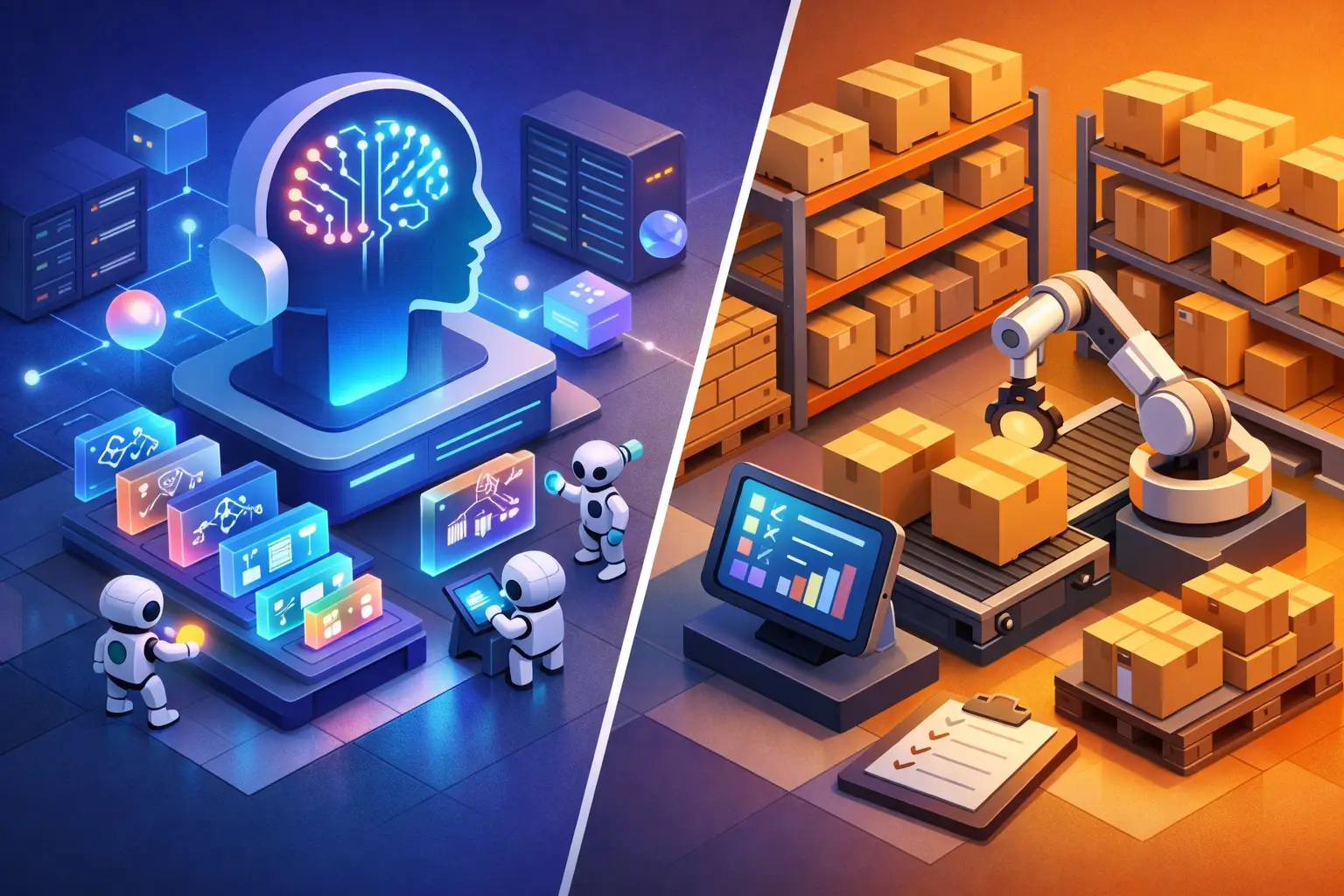
An AI inventory is normally a broad catalogue of AI-related assets and use cases. It answers the initial discovery question: what AI does the organisation use, develop, procure or make available? A useful inventory may include generative AI tools used by staff, machine-learning models embedded in products, automated decision-support processes, third-party AI functionality and internal experiments.
An AI register is generally a more controlled record of those systems. It adds governance context: ownership, purpose, deployment status, affected individuals, data categories, suppliers, risk classification, required assessments, decisions, controls and review dates. Rather than recording that an AI system exists, it records the basis on which the organisation permits it to operate.
The distinction is not fixed by law. Different organisations and regulators may use the terms differently. Some call their master record an inventory and attach detailed governance records to each entry. Others reserve the word register for systems that have passed defined intake and review stages. What matters is the operating model behind the label.
A spreadsheet that lists tool names and business units may be an inventory. It becomes insufficient when a compliance team needs to demonstrate why a particular system was classified in a certain way, whether its supplier was assessed, which controls were agreed, and who must act when the system changes.
Why an inventory alone often stops short
An inventory is an essential starting point, particularly where AI adoption has occurred across separate functions. It supports discovery, eliminates blind spots and gives leadership an initial view of the organisation's exposure. For lean teams, it can also provide a sensible first control while a broader governance programme is being established.
However, inventories commonly weaken over time for three reasons. First, AI systems change quickly. A supplier may introduce a new model, a team may expand a pilot into production, or new data sources may be connected without a corresponding update to the record. Second, the same system can create different risks in different contexts. A language model used to draft internal meeting notes requires different scrutiny from one used to influence recruitment, customer eligibility or access to essential services.
Third, a list rarely creates accountability by itself. A named business unit is not the same as a named system owner with a required review date, defined approval route and documented control obligations. Without these elements, governance relies on individuals remembering what to do.
For organisations preparing for the EU AI Act, this matters particularly where systems may fall within high-risk categories or support regulated decisions. Risk classification is not a one-time labelling exercise. It must connect to the intended purpose, role in the value chain, affected users, human oversight arrangements, data governance, supplier documentation and change management.
What an effective AI register should control
A mature register should function as the authoritative record for oversight decisions. It should not force every minor experiment through the same review as a high-impact deployed system, but it should create a consistent route from discovery to proportionate governance.
At a minimum, each register entry should establish a clear system identity and business purpose, the accountable owner and relevant stakeholders, the development or procurement source, deployment jurisdictions, and the current lifecycle status. It should also capture whether personal data, special category data or confidential business information is involved.
The record then needs to support decisions, not merely descriptions. This means recording the AI risk classification and rationale, applicable regulatory obligations, assessment outcomes, required mitigations, approval conditions, incidents or complaints, and the next review trigger. Useful triggers include a material model update, a change in intended purpose, a new supplier, expansion into another jurisdiction or the introduction of new categories of personal data.
Risk classification needs evidence, not a dropdown
A classification field is useful only when it is supported by documented reasoning. Teams should be able to see which facts led to the determination, who made it, when it was reviewed and what assumptions require revalidation.
For example, a customer service assistant might initially be classified as limited risk because it provides general information and has clear escalation to human support. If the same tool later begins prioritising customers for financial support or influencing access to a service, the use case has changed materially. The register should trigger reassessment rather than leaving the original entry untouched.
This is where workflow discipline has value. The system should route tasks to the appropriate legal, privacy, security, product and business stakeholders, capture their decisions and prevent unresolved actions from disappearing into email threads.
Connect the register to privacy governance workflows
AI oversight is rarely separate from privacy operations. An AI use case may require a Data Protection Impact Assessment, a Legitimate Interest Assessment, a vendor assessment, contract review, security review or updates to Records of Processing Activities. Managing these as isolated documents creates duplicated work and inconsistent records.
A connected governance system links the AI register entry to the underlying evidence. If a team procures an AI-enabled service, the organisation should be able to connect its third-party risk assessment, data processing agreement review, ROPA entry and relevant DPIA in one accountable record. When the supplier changes its processing arrangements or introduces a new feature, the right dependencies are visible immediately.
The same applies to incident management. If an AI system produces an inaccurate result, exposes personal data, behaves outside approved parameters or creates a complaint pattern, the incident record should identify the affected system and its owner. That makes it possible to assess whether the issue is isolated, whether a control failed, and whether the system's risk classification or approval conditions need to change.
Privacy360 is designed around this operational model, combining an AI system registry and EU AI Act risk classification with DPIA, LIA, ROPA, vendor risk assessment, contract review, breach management and evidence collection workflows. The purpose is not to create more administration. It is to make governance actions traceable across the teams responsible for them.
Choosing the right model for your organisation
The right approach depends on the maturity and scale of AI adoption. An organisation at the discovery stage may begin with an inventory campaign across procurement, IT, security, HR, legal and product teams. The immediate aim is to identify systems already in use, including embedded AI services that business teams may not recognise as AI.
But the inventory should be designed with its destination in mind. If it cannot accommodate ownership, classification, assessment links and lifecycle status, it will usually need to be rebuilt once governance requirements increase. A structured register model avoids that disruption while allowing low-risk entries to receive a lighter level of review.
For larger organisations, a tiered approach is often most effective. Maintain a broad inventory of all identified AI systems and use cases, then apply a formal register workflow to systems that are deployed, process sensitive data, affect individuals, support material decisions or meet defined risk thresholds. This balances coverage with operational effort.
The critical control is not whether every entry carries the word register. It is whether the organisation can show a repeatable process for identifying AI, assessing its context, assigning accountability, approving use and responding to change.
Make the register a working management tool
An AI register fails when it becomes an annual reporting exercise. Its value comes from being used at the points where decisions occur: vendor onboarding, product development, data-use changes, model updates, incident response and periodic assurance reviews.
Set clear entry criteria so teams know when a use case must be declared. Assign ownership at business level, with defined input from privacy, security and legal functions. Build review dates and change triggers into the workflow rather than relying on manual reminders. Most importantly, give leadership reporting that shows not just how many AI systems exist, but where assessment gaps, overdue actions, high-risk classifications and supplier dependencies sit.
A well-run AI register turns an expanding AI estate into a controlled management process. Start with complete visibility, then make every material use case accountable, evidenced and ready for review when its purpose or risk changes.
Organisations that need specialist support alongside the platform can draw on Formiti's global privacy and AI governance services for outsourced DPO delivery, assessments and regulatory readiness across more than 120 countries.