AI Governance Platform for Retailers
By Formiti Global DPO Team, Formiti Data International
Learn how an AI governance platform helps retailers manage AI risk, suppliers and compliance, and build a practical AI governance strategy.
Topics: AI Governance, Retail, Compliance, GDPR
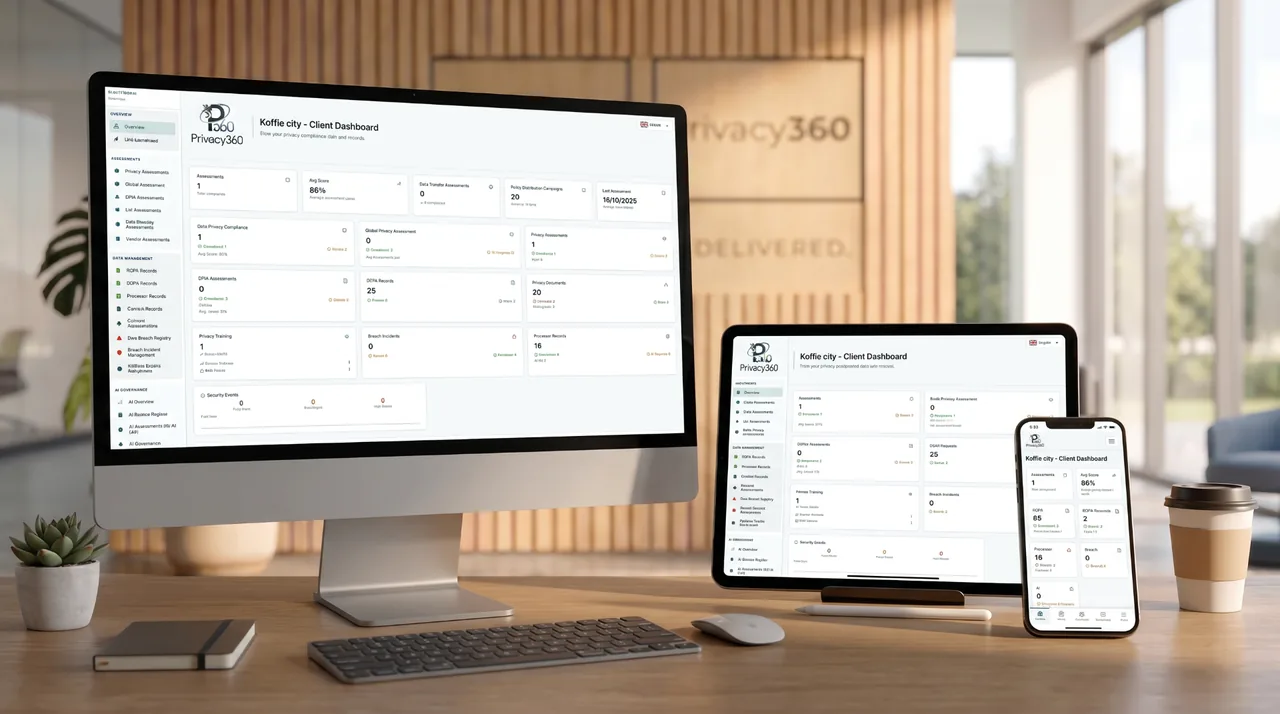
Putting this into practice? See how Privacy360's AI governance software handles it. Govern AI systems end to end: register, assess, remediate and evidence under the EU AI Act.
Introduction
Retailers now use AI in almost every part of the business. It sets prices. It forecasts demand. It personalises offers and screens fraud. It even powers store cameras and customer chatbots.
However, adoption has moved faster than oversight. Many teams cannot say how many AI tools they use. Fewer still can show who approved them.
This gap creates real risk. Regulators expect accountability. Customers expect fairness. Boards expect evidence. Therefore, an AI governance platform is no longer optional for serious retail organisations.
This guide explains what AI governance means, why retail faces unique pressure, and how to build a strategy that works. It also shows how Privacy360's AI governance solution supports each step.
What Is AI Governance?
AI governance is the set of policies, roles and controls that guide how an organisation uses AI. It covers the full lifecycle. That includes selection, deployment, monitoring and retirement.
Good governance answers a few simple questions:
- What AI systems do we use?
- Who owns each one?
- What data does it process?
- What could go wrong?
- Who checks that it still works safely?
In short, governance turns good intentions into documented decisions. Consequently, it lets a business use AI with confidence rather than hesitation.
What Is an AI Governance Platform?
An AI governance platform is software that manages these controls in one place. Instead of scattered spreadsheets and email threads, teams work from a single system of record.
A strong platform typically helps you to:
- Keep a live inventory of AI systems
- Track third-party AI suppliers
- Run structured risk and impact assessments
- Assign owners and approval workflows
- Produce evidence for auditors and regulators
Moreover, a platform creates consistency. Every team follows the same process. Every decision leaves a trail. As a result, governance scales as your AI use grows.
Spreadsheets cannot do this reliably. They go stale quickly. They also hide gaps until an audit exposes them.
Why AI Governance Matters for Retailers
AI governance for retailers carries its own challenges. Retail touches vast numbers of consumers every day. It also relies heavily on data and on outside vendors.
Customer data at scale
Retailers process loyalty data, purchase history, location data and payment information. AI models often combine these sources. Therefore, data protection duties apply directly to AI use. In the UK and EU, that means GDPR obligations around lawful basis, transparency and automated decision-making.
Fairness in pricing and personalisation
Dynamic pricing and targeted offers can affect customers differently. Poorly tested models may treat groups unfairly. Consequently, retailers need documented testing and clear accountability.
In-store technology
Footfall analytics, cameras and smart tills raise sensitive questions. Some involve biometric or behavioural data. Because of this, assessments should happen before rollout, not afterwards.
Heavy reliance on suppliers
Most retailers buy AI rather than build it. Recommendation engines, chatbots and forecasting tools usually come from vendors. Even so, the retailer remains accountable for how those tools are used.
Growing regulatory expectations
AI-specific regulation is emerging across many markets. The EU AI Act introduces risk-based duties with phased timelines. Meanwhile, regulators such as the UK ICO continue to publish AI guidance. Retailers operating across borders must therefore prepare for overlapping rules.
Building an AI Governance Strategy: Five Core Steps
An effective AI governance strategy does not need to be complicated. Nevertheless, it does need structure. The five steps below form a practical foundation.
Step 1: Know what AI you use
You cannot govern what you cannot see. So, start with a complete inventory.
Include tools built in-house and tools bought from vendors. Include AI features hidden inside existing software. Staff often adopt these without telling anyone.
An AI system register solves this problem. It records each system, its purpose, its owner and its data. Furthermore, it becomes the backbone of every other governance activity.
A good register captures:
- The system name and business purpose
- The team or person responsible
- The data categories involved
- The supplier, where relevant
- The current risk rating and status
Step 2: Oversee your AI suppliers
Next, look at your vendors. Third-party AI is often where the largest blind spots sit.
Ask each supplier clear questions. How was the model trained? Where is data stored? Does the vendor reuse your data? What testing and security controls exist?
Then record the answers centrally. Privacy360's AI suppliers module helps you track vendors, due diligence and ongoing review. In addition, it keeps supplier information linked to the systems they provide.
This matters because supplier risk changes over time. Models update. Terms change. Therefore, one-off checks are not enough.
Step 3: Assess risk before and after deployment
Once systems and suppliers are mapped, assess the risks. Not every AI use carries the same weight. A product-description generator differs greatly from a credit or pricing model.
Structured assessments bring consistency. They also create the evidence regulators ask for. Privacy360's AI assessments module supports this work with repeatable workflows.
A sound assessment considers:
- Purpose and necessity of the AI use
- Data protection and privacy impact
- Fairness, bias and accuracy
- Transparency towards customers
- Human oversight and escalation routes
- Security and resilience
Importantly, assessments should be revisited. Models drift, and business use changes. Consequently, review dates belong in the process from the start.
Step 4: Assign clear roles and accountability
Governance fails when nobody owns it. Therefore, define roles early.
Typical roles include an executive sponsor, a governance lead and named system owners. Legal, privacy, security and procurement should all have a seat. Meanwhile, data protection officers should advise on privacy impact.
Keep responsibilities simple and written down. Then link them to each system in your register. That way, accountability is visible rather than assumed.
Step 5: Monitor, review and evidence
Finally, governance must continue after launch. Set regular reviews. Track incidents and complaints. Record changes to models and suppliers.
Just as importantly, keep evidence. When a regulator, auditor or board member asks questions, you should answer quickly. A platform makes this far easier than reconstructing history from emails.
What to Look for in an AI Governance Platform
Not every platform suits every retailer. Compare options against practical criteria before you commit.
Coverage of the full lifecycle. The platform should connect inventory, suppliers and assessments. Isolated tools create new silos.
Retail-friendly workflows. Look for templates that fit real use cases. Examples include personalisation, pricing, fraud and workforce tools.
Privacy integration. AI risk and data protection overlap heavily. Choose a platform built with privacy in mind.
Clear reporting. Boards need summaries. Regulators need detail. Both should be easy to produce.
Ease of adoption. Busy teams will avoid clunky tools. Simple interfaces drive real usage.
Room to grow. Regulation will evolve. Your platform should adapt without a rebuild.
Common Mistakes to Avoid
Many organisations stumble in similar ways. Watch for these traps.
- Writing policy without operations. A policy document alone changes little. Pair it with registers, workflows and reviews.
- Ignoring shadow AI. Staff use public AI tools daily. Set clear rules and give them approved alternatives.
- Treating governance as a one-off project. It is an ongoing programme. Plan for continuous review.
- Leaving suppliers unchecked. Vendor AI carries your risk. Assess it accordingly.
- Overengineering from day one. Start with high-risk systems. Then expand coverage steadily.
How Privacy360 Supports AI Governance
Privacy360 brings these building blocks into one connected environment. Rather than juggling separate tools, your team works from a single platform.
- The AI governance hub gives an overview of the programme and its controls.
- The AI system register maintains your live inventory of AI systems.
- The AI suppliers module tracks vendor due diligence and ongoing oversight.
- The AI assessments module standardises risk and impact reviews.
Because these modules connect, information flows naturally. A supplier record links to the systems it provides. Those systems link to their assessments. Consequently, your evidence stays consistent and easy to find.
This approach suits retailers especially well. Retail teams manage many vendors and many customer-facing tools. A joined-up platform reduces duplicated effort and missed risks.
A Simple Roadmap to Get Started
Feeling overwhelmed is normal. Fortunately, you can begin with small steps.
- Weeks 1–2: Identify your AI systems and record them in a register.
- Weeks 3–4: List your AI suppliers and request key information.
- Weeks 5–8: Assess your highest-risk systems first.
- Weeks 9–12: Assign owners, set review dates and agree reporting.
- Ongoing: Review regularly and expand coverage.
By following this order, you build momentum. Meanwhile, you address the most serious risks early.
Conclusion
AI is now central to modern retail. Yet its benefits depend on trust. Customers, regulators and boards all want proof that AI is used responsibly.
An AI governance platform provides that proof. It gives you visibility, accountability and evidence. Furthermore, it turns a complex challenge into a manageable routine.
Start with an inventory. Add supplier oversight. Then layer in structured assessments. Over time, these steps form a resilient AI governance strategy.
Ready to take the next step? Explore Privacy360's AI governance platform and see how your team can govern AI with confidence.
Common questions
- What is an AI governance platform?
- It is software that manages AI inventory, suppliers, risk assessments and accountability in one place. It also produces evidence for audits and regulators.
- Why do retailers need AI governance?
- Retailers process large volumes of customer data and rely on many AI vendors. Governance reduces legal, ethical and reputational risk.
- What should an AI governance strategy include?
- It should include an AI inventory, supplier oversight, risk assessments, defined roles and ongoing monitoring.
- How is AI governance different from data protection compliance?
- They overlap, but AI governance is broader. It also covers fairness, accuracy, transparency and model oversight.
- Where should we start?
- Begin with an AI system register. You cannot manage risks you have not identified.